🗯
Context Shifting
The process of switching from one 'thing' to another, of which there is a cost.
Similar psychology:
Last updated: 26/09/2026
How to utilise this in your designs




Possible impacts
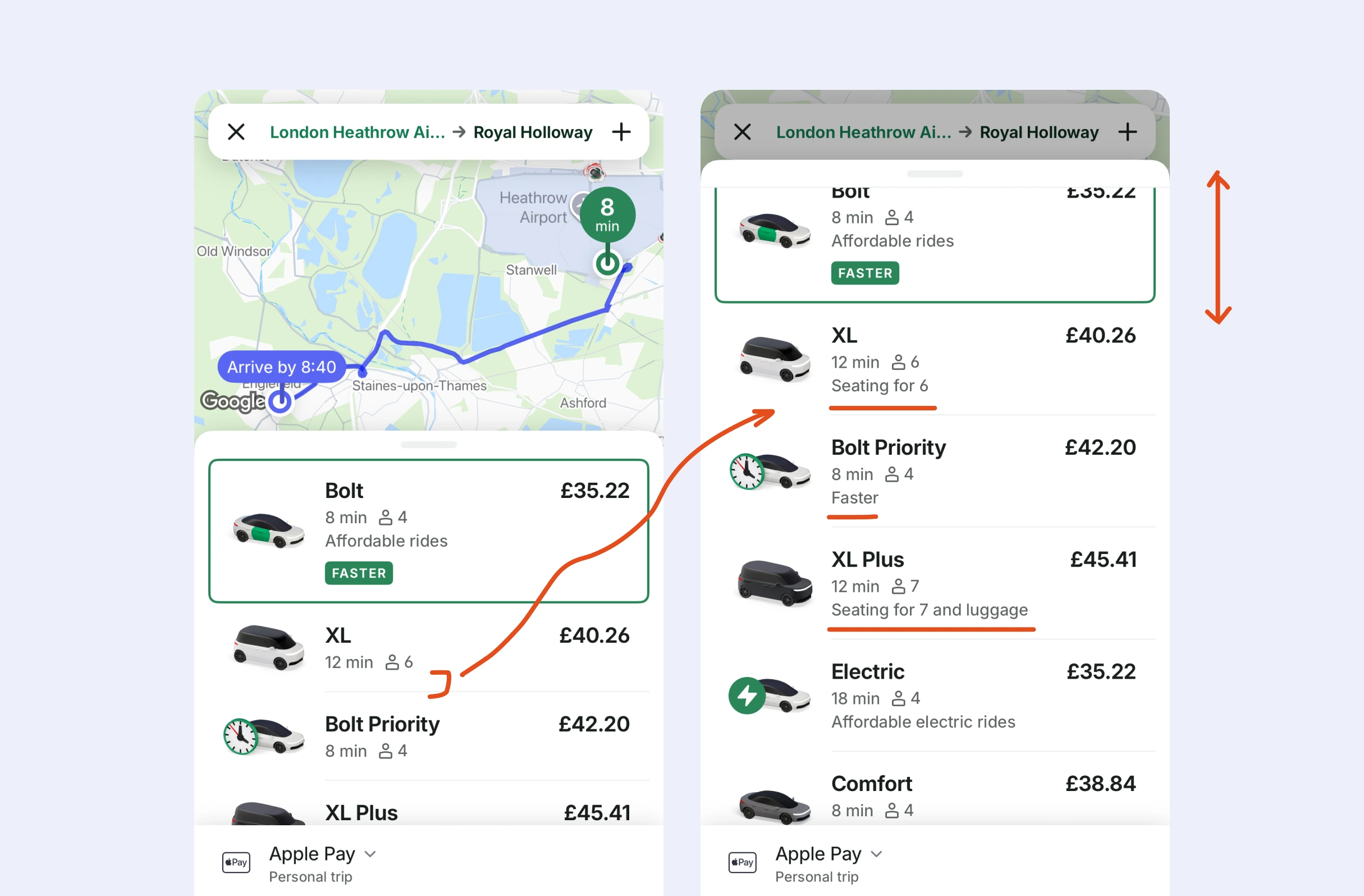
You could increase feature usage by bridging into a feature from where users already are, rather than asking for a significant context shift to reach it.
It's possible users form habits more easily when the steps of a routine sit in one flow, with fewer context shifts breaking their momentum.


Cutting unnecessary context shifting within a task could improve efficiency, as users spend less time regaining focus after each switch.


Keeping relevant information in place might help users stay focused on the task, as each context shift risks them losing their train of thought.

Written by Peter Ramsey
Published: