🎰
Variable Rewards
Variable rewards (such as spinning a wheel to unlock a prize), often motivate users more than predictable ones.
Featured in 34 UX Bites
Similar psychology:
Last updated: 03/11/2026
How to utilise this in your designs
When you need people to do a dull, recurring task, try letting them spin a wheel for a variable reward each time they complete it, so the chore has a moment to look forward to.

Example from Octopus Energy
After someone hits their daily goal, you could let them open a safe revealing a variable number of coins, so finishing ends with a surprise, not a fixed payout.

Example from Mimo
One option is to offer a treasure chest at milestones, holding a variable reward such as a pro tip about a feature someone might not have tried yet.
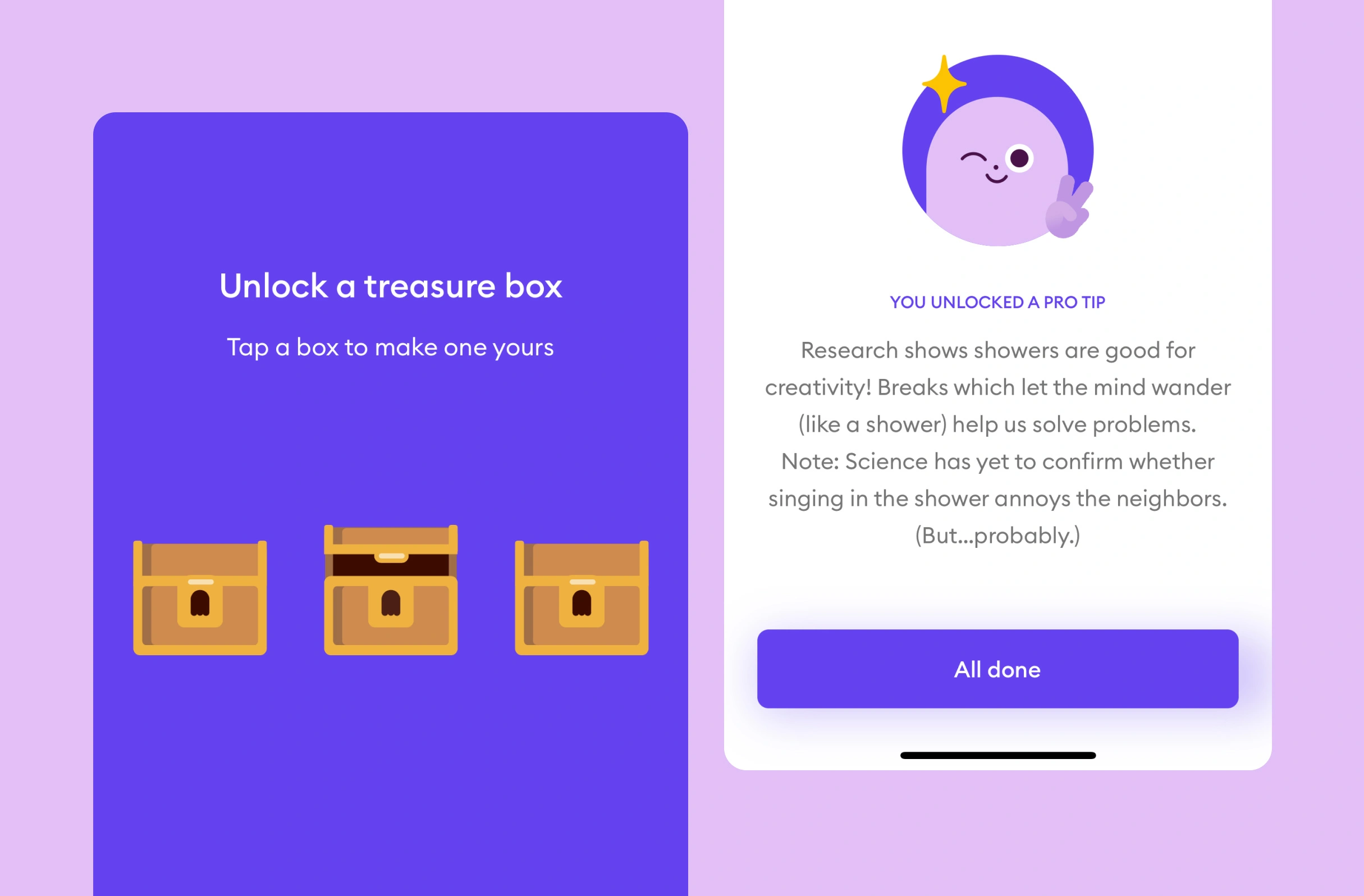
Example from Ahead
Consider showing a random celebration when someone completes a task, and very occasionally a much bigger one, so the variable reward keeps small wins feeling fresh.
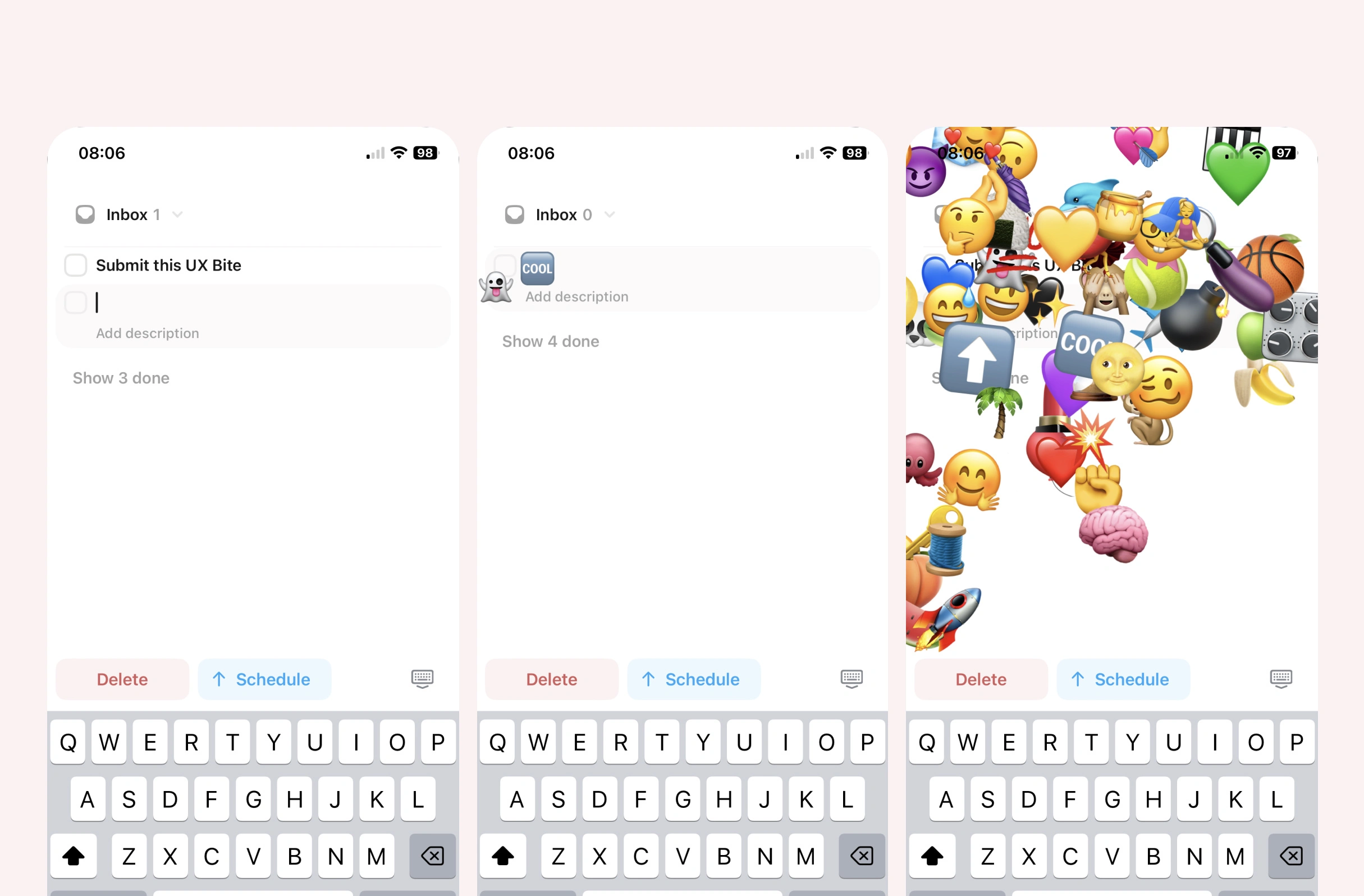
Example from Amie
It may help to occasionally send customers a ticket they scratch to reveal if they've won, so the build-up before the reveal becomes part of the reward.
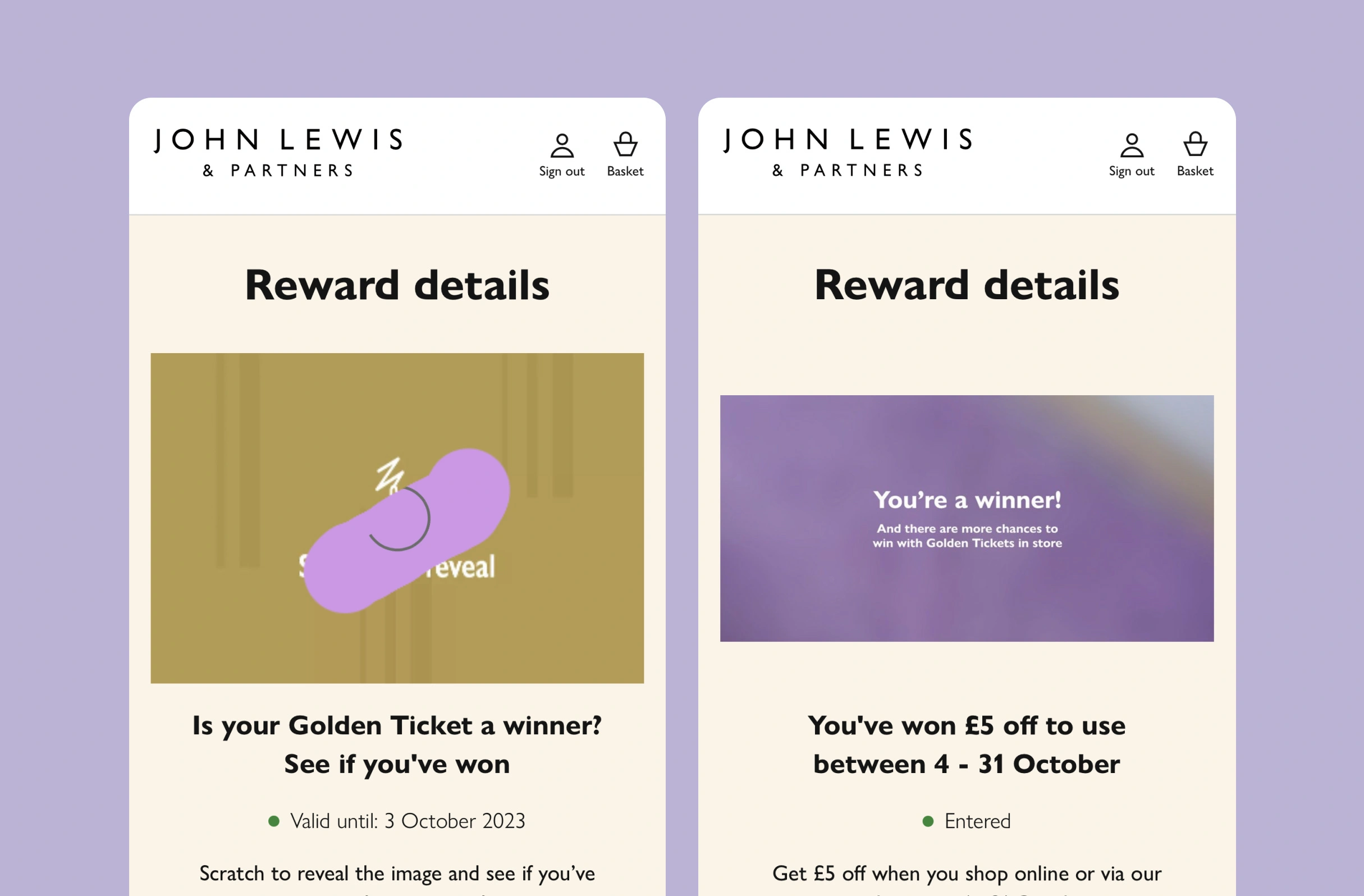
Example from John Lewis
Possible impacts
Attaching a variable reward, e.g., a spin to win, to a task people tend to skip could increase how often they use that feature, as each completion has a prize to uncover.
Variable rewards at the end of a daily goal might help users build habits, as not knowing what they'll get gives them a reason to come back and find out.
Users may put in more effort to reach a goal or milestone when a variable reward is waiting, because anticipating the reveal makes finishing feel worthwhile.
A variable reward could raise how valuable a reward feels, as people have paid more than twice as much for a mystery reward as for a guaranteed one.
Celebrations that vary each time, with the occasional bigger surprise, could increase how much users enjoy small moments like completing a task.

Written by Peter Ramsey
Published: