UX Content
  • Case Studies
  • UX Bites
  • Cheatsheets
  • Psychology
BFM+
  • Instant Feedback
  • MCP
  • Figma Plugin
  • Tiers & pricing
  • Free newsletter
  • Log in
Other
  • Archive
  • About
  • Help
  • Changelog
Services
UX audits

A complete audit of your user experience, delivered in a format that you can't ignore.

Book an audit

Built for Mars Ltd is a company registered in England and Wales (Company No. 12731987).

Account
  • Log inAccess your library and activities
  • SubscribeUnlock all features and access to the library
Learn from the best companies in the world

A library of content that even non-designers find interesting.

Subscribe todaySubscribe today
Structured learning
  • UX BootcampEnroll in a 5-week bootcamp
  • PathwaysCreate custom learning Pathways to work towards any goal, industry or topic
  • CollectionsBrowse Case Studies by key topics
  • QuizzesTest your knowledge
Explore the library
  • Case StudiesSlideshows that are packed with research
  • UX BitesReal examples of design magic
  • CheatsheetsQuickly level up in a particular area
  • Product PsychologyLearn the essentials
  • NewsletterGet research straight to your inbox
  • CompaniesBrowse by company
Learn from the best companies in the world

A library of content that even non-designers find interesting.

Subscribe todaySubscribe today
Tools to help you
  • AI InsightsUpload screenshots of your design, and get instant feedback from our AI
  • MCPAccess the entire library from your favourite agent
  • Figma pluginAccess our AI tools, and our entire library, directly from Figma
One-to-one help
  • UX AuditsThe fast-track for growth
Includes tools that help you ship better products

Learning never stops, but sometimes you need a little more.

Subscribe todaySubscribe today
Log inSubscribe today
Home
UX Glossary
Curiosity Gap

🧩

Curiosity Gap

When presented with obviously-incomplete information, people have a tendency to try and fill in the blanks.

Featured in 14 UX Bites

Similar psychology:

Tribalism
User Delight
Social Proof

Likely impacts:

Conversion Rates
Attention & Interest
Effort & Motivation
Complexity & Understanding
Last updated: 03/11/2026

How to utilise this in your designs

Before someone starts the next lesson, you could tease it with an open-ended question or statement, so the curiosity gap pulls them in to find the answer.

Course path page. Each lesson pop-up pairs its title and "Start lesson" button with a one-line teaser, "What does the world look like to a scientist?"; after completion, the next lesson, "Science Rules", shows its own teaser.
Example from
Brilliant logo
Brilliant

To encourage someone to finish a puzzle, try teasing that one of their friends couldn't complete it, which opens a curiosity gap about whether they can.
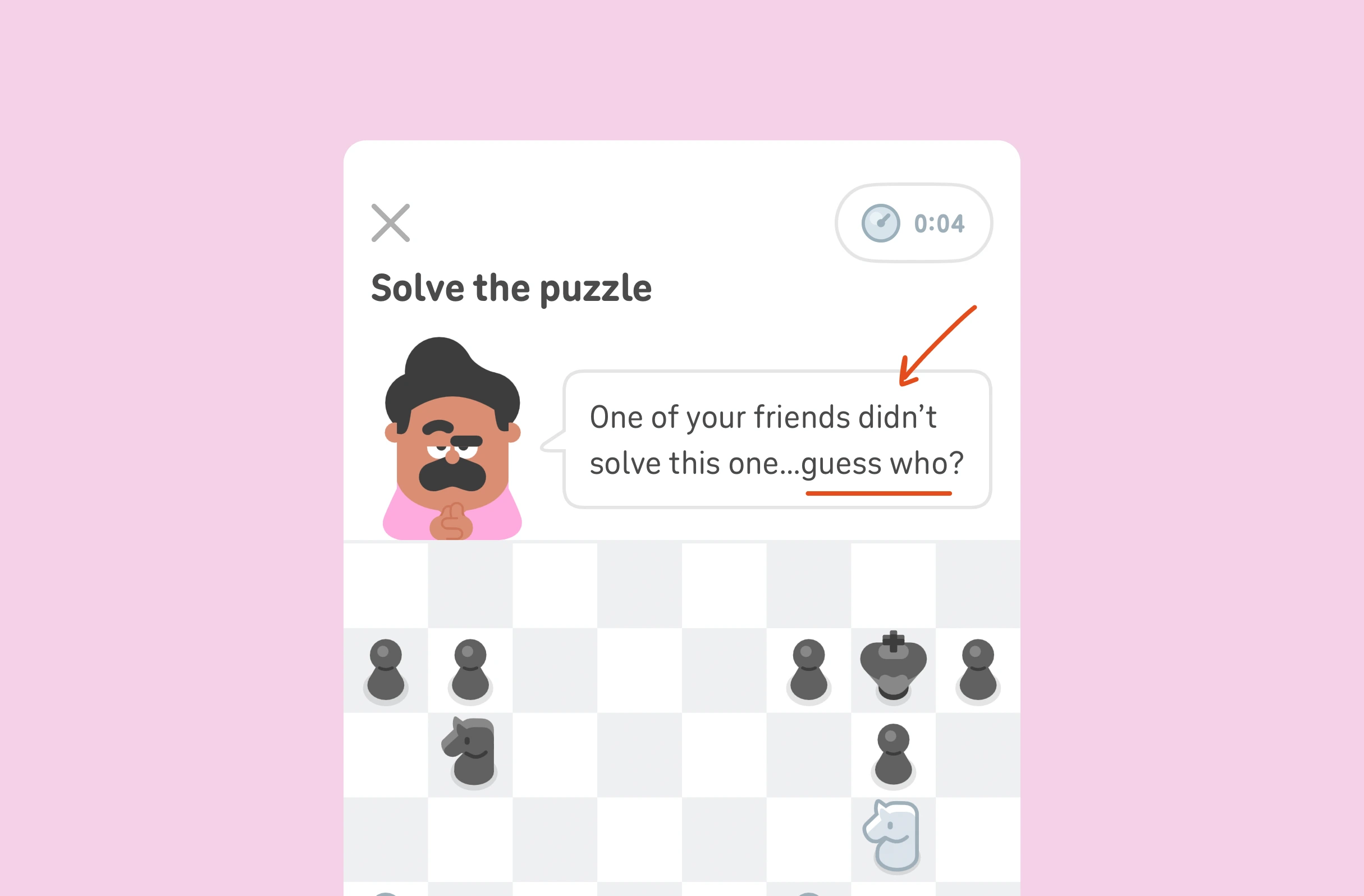
Chess puzzle screen. Under "Solve the puzzle", a character teases "One of your friends didn't solve this one…guess who?", using social competition to motivate solving it, while a timer runs.
Example from
Duolingo logo
Duolingo

When content is muted, one option is to make the unmute button's background bounce with the audio levels, so people are curious enough to switch it on.
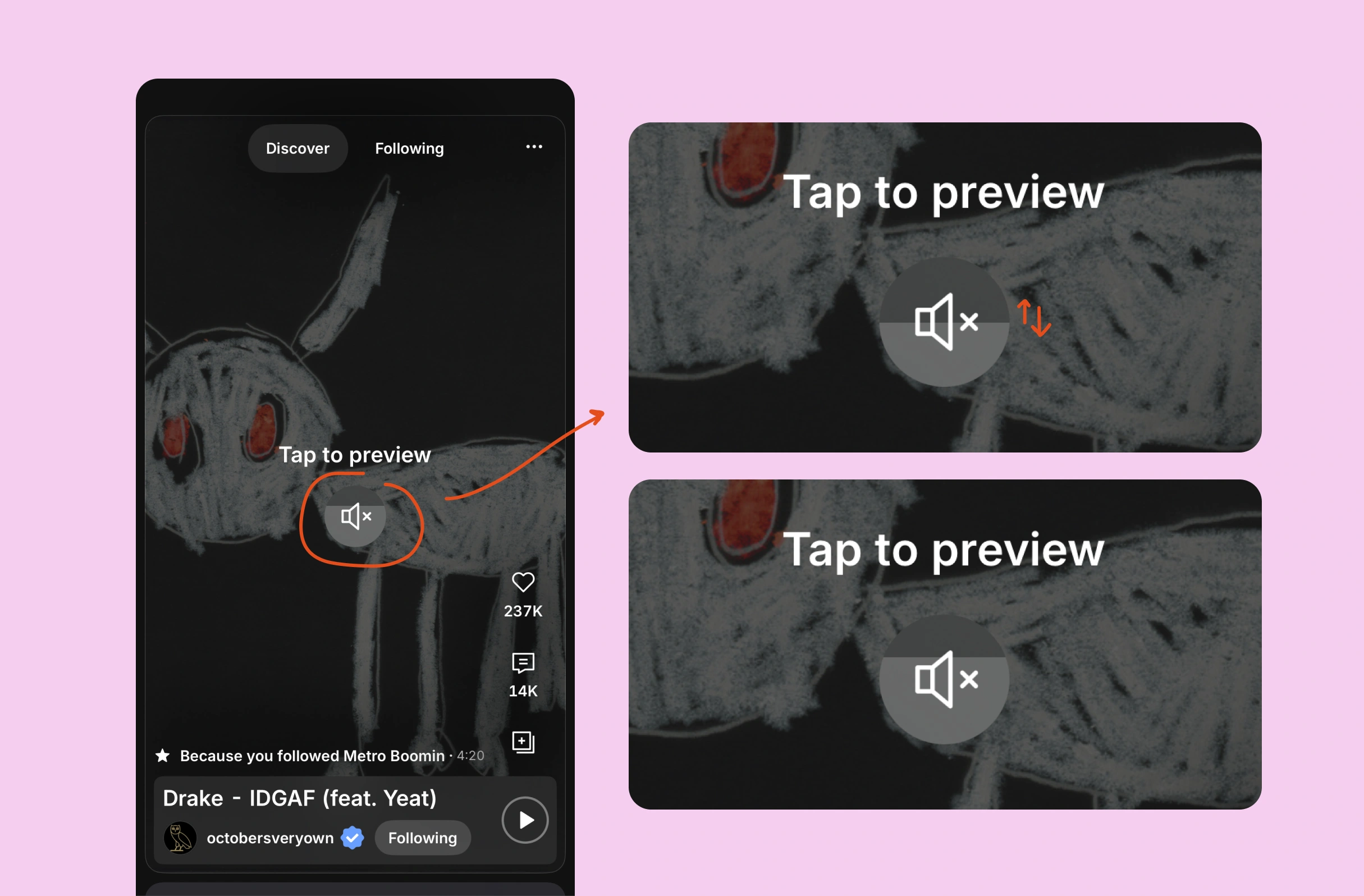
Music discovery feed. A muted speaker button under "Tap to preview" has a fill that animates up and down, drawing attention to tapping it to hear an audio preview of the track.
Example from
Soundcloud logo
Soundcloud

Consider hiding a short daily fact behind a tap-to-reveal card, so curiosity gets people to tap, and they learn something about the topic along the way.

Health app feed. A "Did you know?" card says "Your daily fact is ready for you!". Tapping its arrow reveals the fact in place, "You can usually continue HRT for life", without leaving the "Learn" tab.
Example from
Balance Health logo
Balance Health

When someone redeems a streak reward, it may help to hide what they've won behind a scratch card, so they're curious to reveal it rather than simply being told.
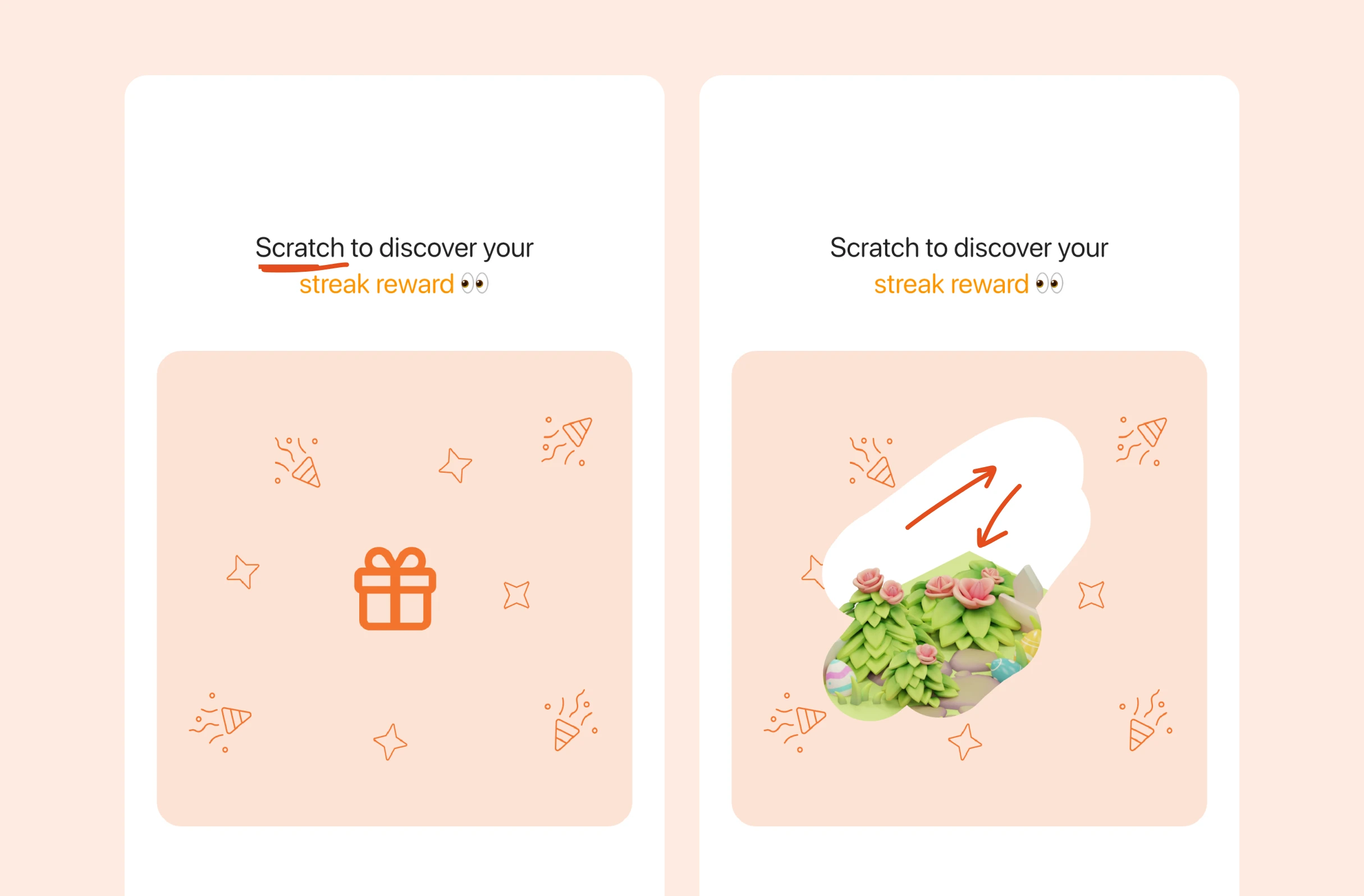
Streak reward screen. A scratch card prompts "Scratch to discover your streak reward"; rubbing back and forth over the gift-covered panel gradually erases the cover to reveal a hidden illustrated reward underneath.
Example from
Focus Tree logo
Focus Tree

Possible impacts

Ending each step with an open question or a tease could increase how many people start the next one, as they want to close the curiosity gap.

As seen in:
Brilliant logo
Brilliant
Creating curiosity
Duolingo logo
Duolingo
Duolingo's curiosity gap

Making it obvious that something is partly hidden, e.g., a blurred preview or a hint of what's playing, may draw more attention, as people want to fill in the blanks.

As seen in:
Brilliant logo
Brilliant
Creating curiosity
Soundcloud logo
Soundcloud
Bouncing audio levels

Because curiosity peaks when the answer feels close, a curiosity gap might motivate people to put in more effort, e.g., finishing a puzzle or lesson.

As seen in:
Brilliant logo
Brilliant
Creating curiosity
Duolingo logo
Duolingo
Duolingo's curiosity gap

Framing a topic as a question or a hidden fact to reveal could help users take in new information, as they're actively curious about the answer.

As seen in:
Balance Health logo
Balance Health
Daily facts
Profile photo. A circular headshot of a smiling young man with short tousled hair and round glasses, suitable as an author avatar or user profile picture. No interface elements are shown.

Written by Peter Ramsey

Consultant to 100+ companies

Published: 10/09/2023