🏔
Peak-end Rule
People tend to overvalue both the peak of an experience, and the end.
Featured in 4 UX Bites
Similar psychology:
Last updated: 03/11/2026
How to utilise this in your designs
You could briefly shower the confirmation screen in confetti after someone places an order, so the purchase ends on a high they're likely to remember.
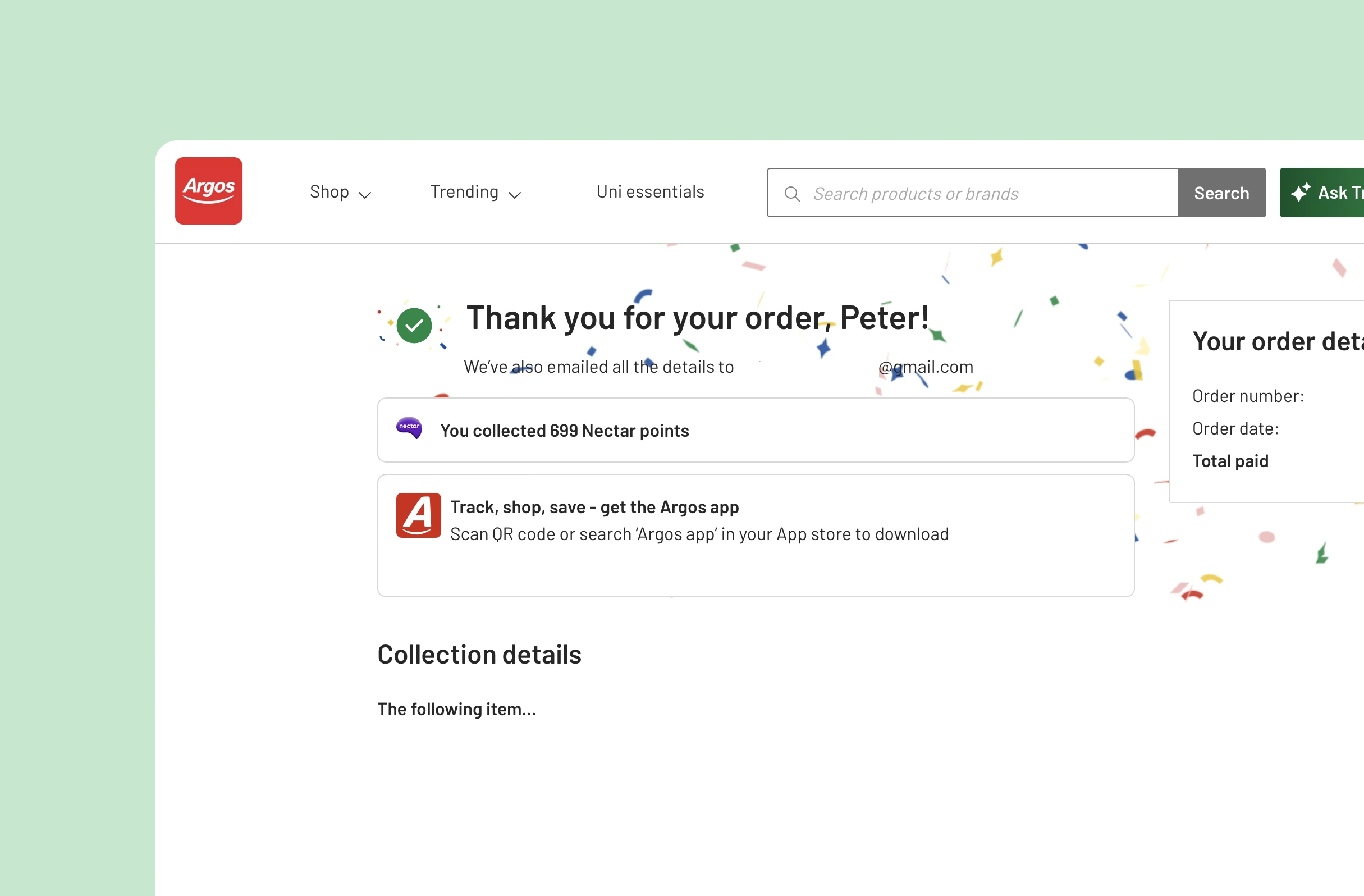
Example from Argos
When an order arrives sooner than expected, try sending a custom notification that points it out, so the end of the experience feels like a peak, not routine.

Example from Uber
Consider prompting people to add a home screen widget straight after they finish a task and feel 'complete', timing the request to that high point.
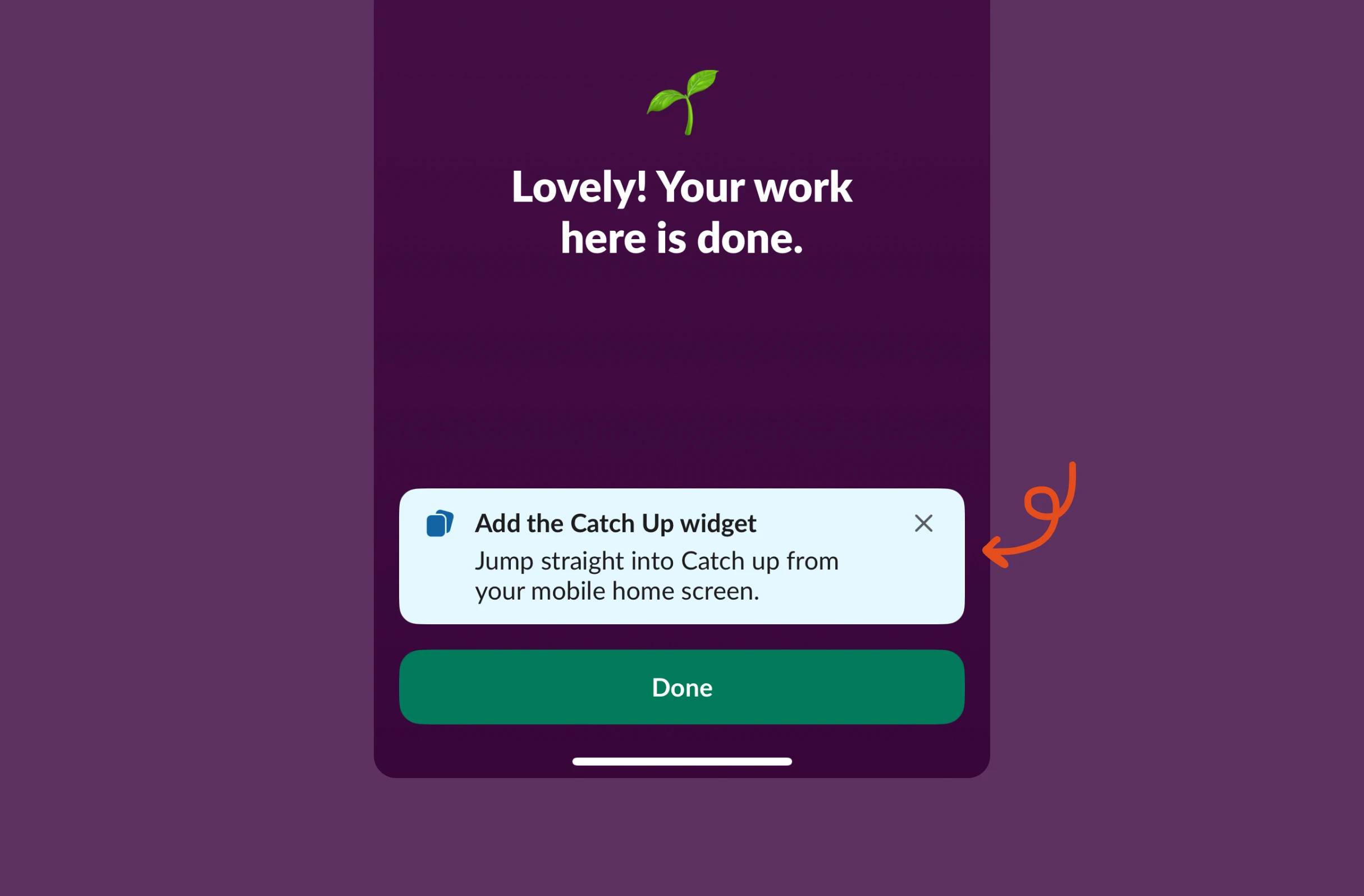
Example from Slack
One option is to turn on a feature with a small physical gesture, e.g., dragging a bank note into a wallet, then add confetti to create a standout moment.
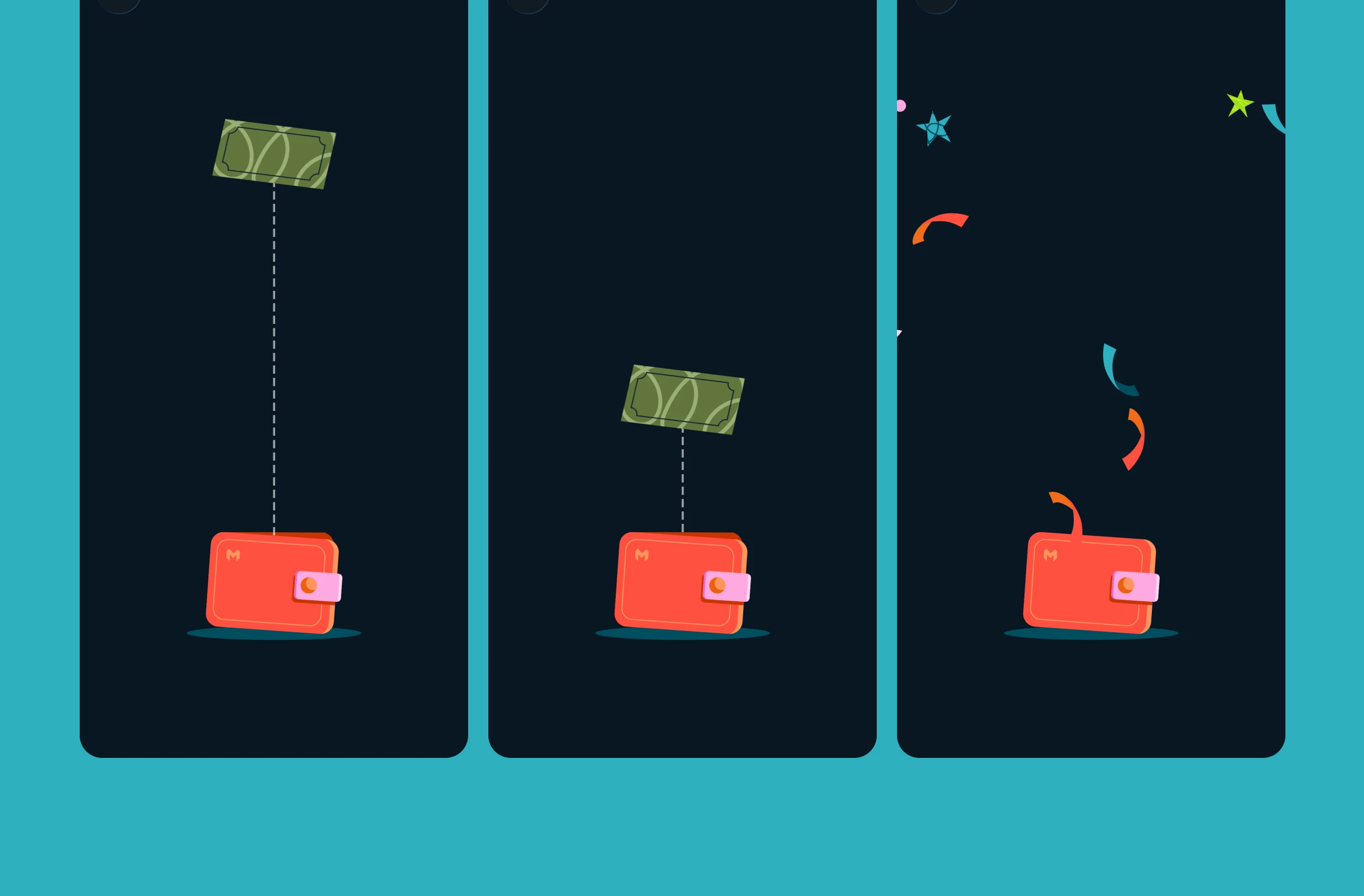
Example from Monzo
When someone returns after a break, it may help to make restarting their streak a small moment of theatre, like a swipe, so their return opens with a memorable peak.

Example from Duolingo
Possible impacts
Because people judge an experience by its peak and its end, finishing on a high could leave users with a fonder memory, making them more likely to recommend it.

Since people remember the peak more than the average, a standout moment, such as an order arriving early, may raise how valuable the whole experience feels.
Ending a journey with a small celebration, e.g., confetti on a confirmation screen, could leave users feeling happier about the whole experience, as the end weighs heavily in memory.

Written by Peter Ramsey
Published: