🙋♂️
Social Proof
People adapt their behaviour based on others. Our subconscious shortcut is to use social proof, and look at what others are doing.
Featured in 60 UX Bites
Similar psychology:
Last updated: 03/11/2026
How to utilise this in your designs
When people pick from unfamiliar options, e.g., airport drop-off areas, you could show what percentage of others chose each one, so social proof points them to a safe pick.
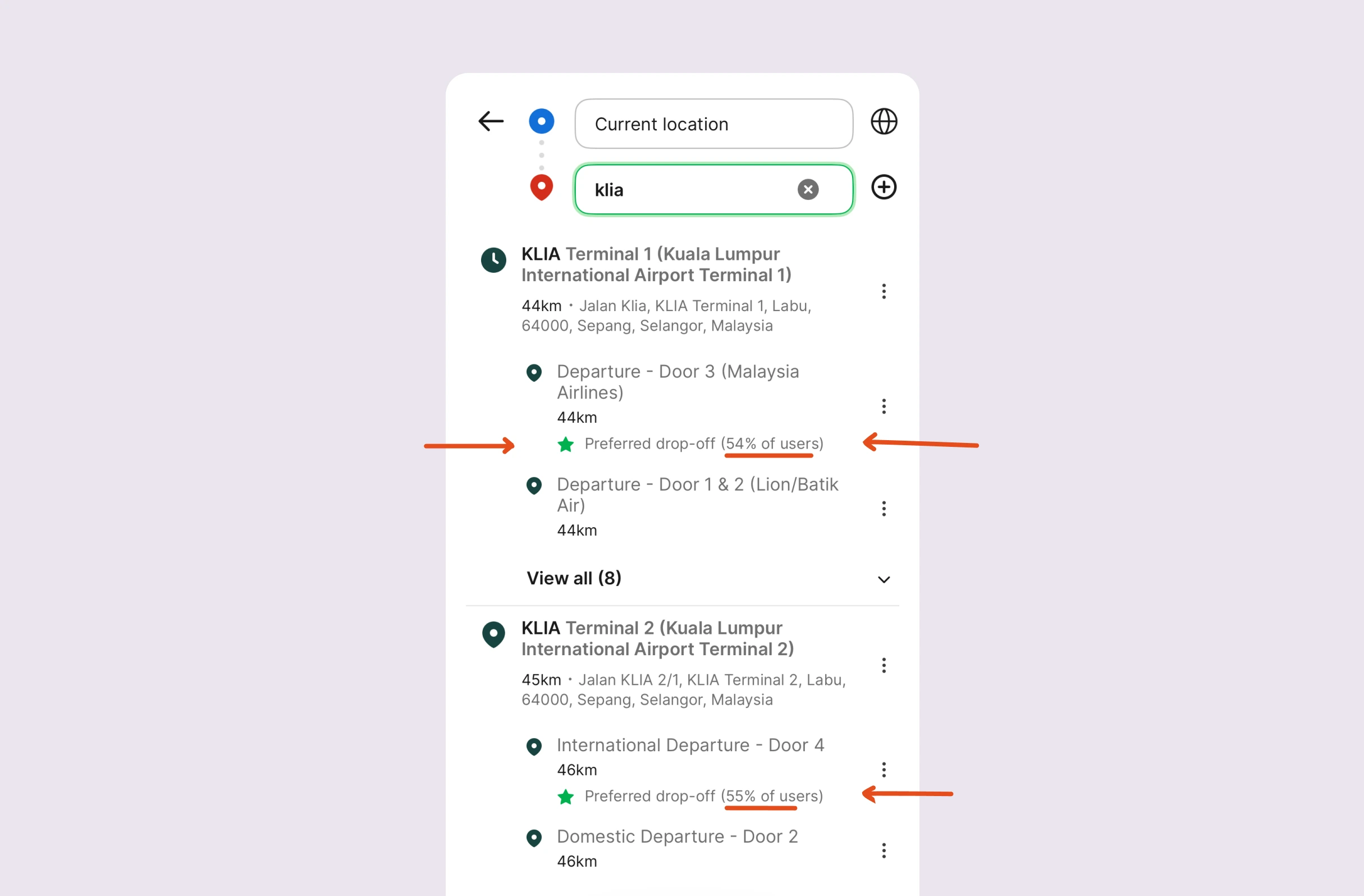
Example from Grab
As someone joins a group, try showing how many people like them are already members, so the social proof feels personally relevant.

Example from Discord
Right after a choice in onboarding, e.g., picking a voice, consider confirming it with how many others chose the same, so people feel reassured they picked well.

Example from Speechify
When asking users to finish an optional setup step, e.g., adding a payment method, it may help to add data-driven social proof showing how many others have done it.
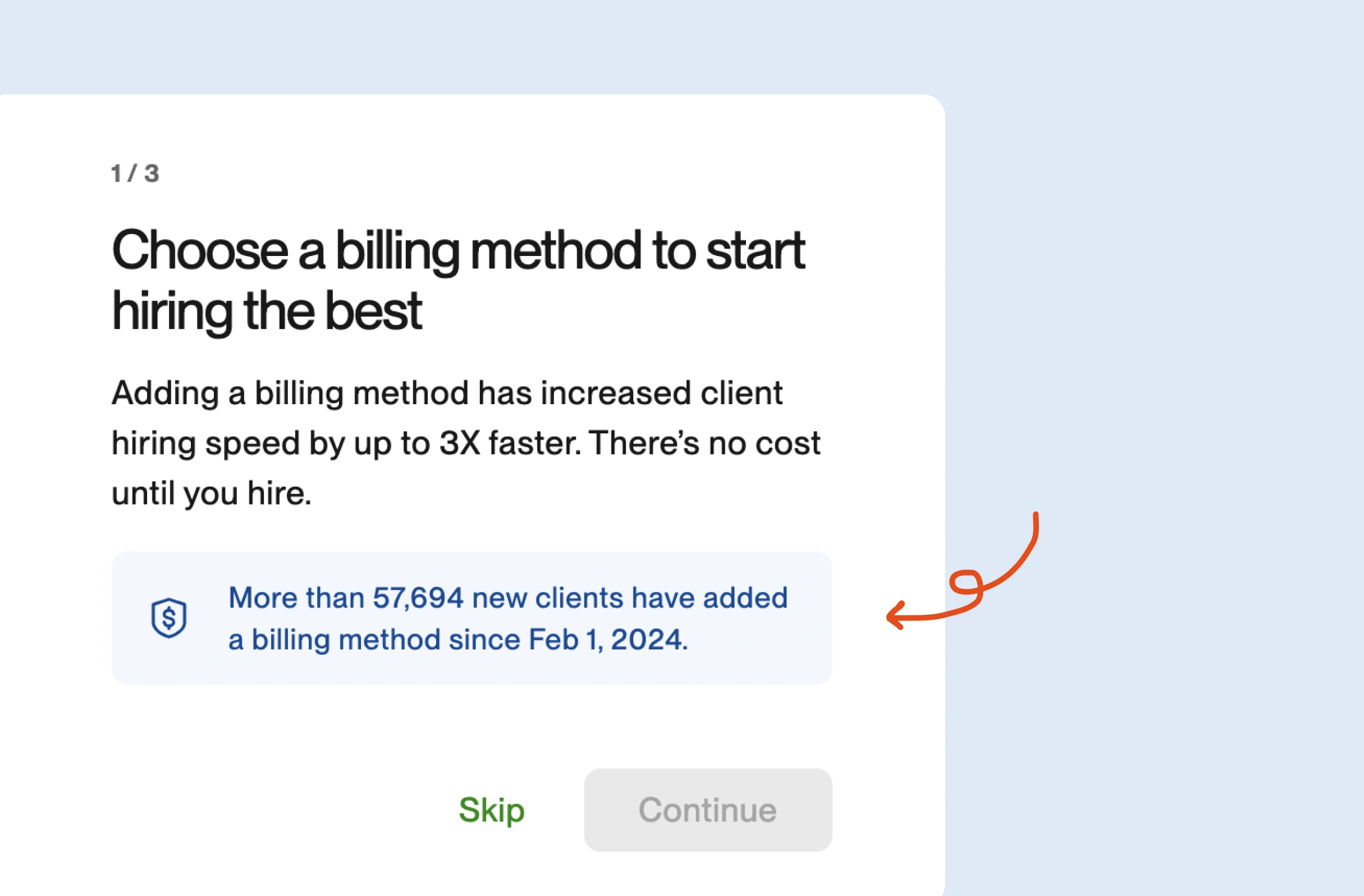
Example from Upwork
To encourage people to start an activity, one option is to show how many others are doing it right now, a gentle signal that beginning is normal.

Example from Headspace
Possible impacts
Showing hesitant users how many people like them have already joined could reassure them that signing up is normal and safe, and may lift conversion rates.
A real, rising count of supporters or buyers could act as social proof that others trust it, which may encourage more people to pay or donate.


Telling users how many others chose the same option could validate their choice through social proof, and might raise how much they value what they picked.
Seeing other users nearby offers social proof that the product is popular and worth mentioning, which might increase sharing and referrals.


Written by Peter Ramsey
Published: