📮
User-Initiated Triggers
People are more likely to interact with a trigger (e.g., a push notification, or an alert), if they've set it up themselves.
Featured in 27 UX Bites
Similar psychology:
Likely impacts:
Last updated: 03/11/2026
How to utilise this in your designs
If someone abandons a task midway, you could ask if they'd like a reminder to finish it later, so the nudge that follows is one they asked for themselves.
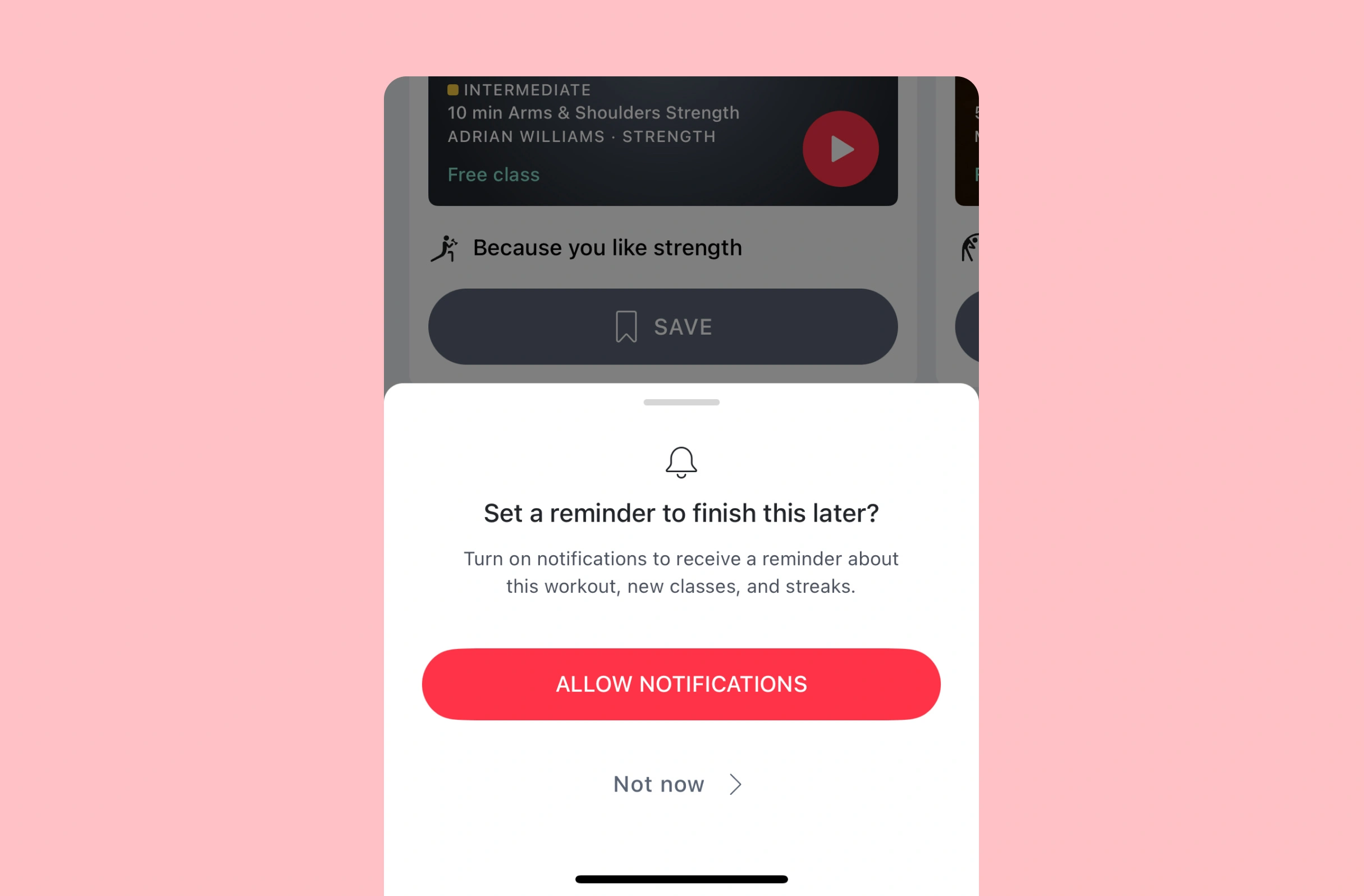
Example from Peloton
Try prompting users to set their own goal after their first session, rather than giving them a pre-set one, so the target they're reminded of is one they chose.

Example from Duolingo
During onboarding, it may help to ask users what time of day they like to hear from you, then schedule notifications around their answer, so reminders feel self-chosen.

Example from Headway
Once someone completes their first key action, consider offering a daily reminder pre-set to the current time, so setting up their own trigger takes a single tap.

Example from Day One
One option is to let users pick which notification types they care about, with live examples, while asking for permission, so they opt into alerts they've chosen.

Example from Tomorrow
Possible impacts
A self-set reminder offered when someone pauses or leaves might help reduce churn, as users may be more likely to return to a prompt they asked for themselves.
Users who choose which alerts they receive may act on them more often, which could increase use of the features those notifications point to.
User-initiated triggers may feel expected rather than intrusive, so notifications could get more attention and be switched off less often.


Letting users set their own goals and reminder times could boost motivation, as they feel committed to a target they picked rather than one handed to them.

Written by Peter Ramsey
Published: