Gamification to maintain focus
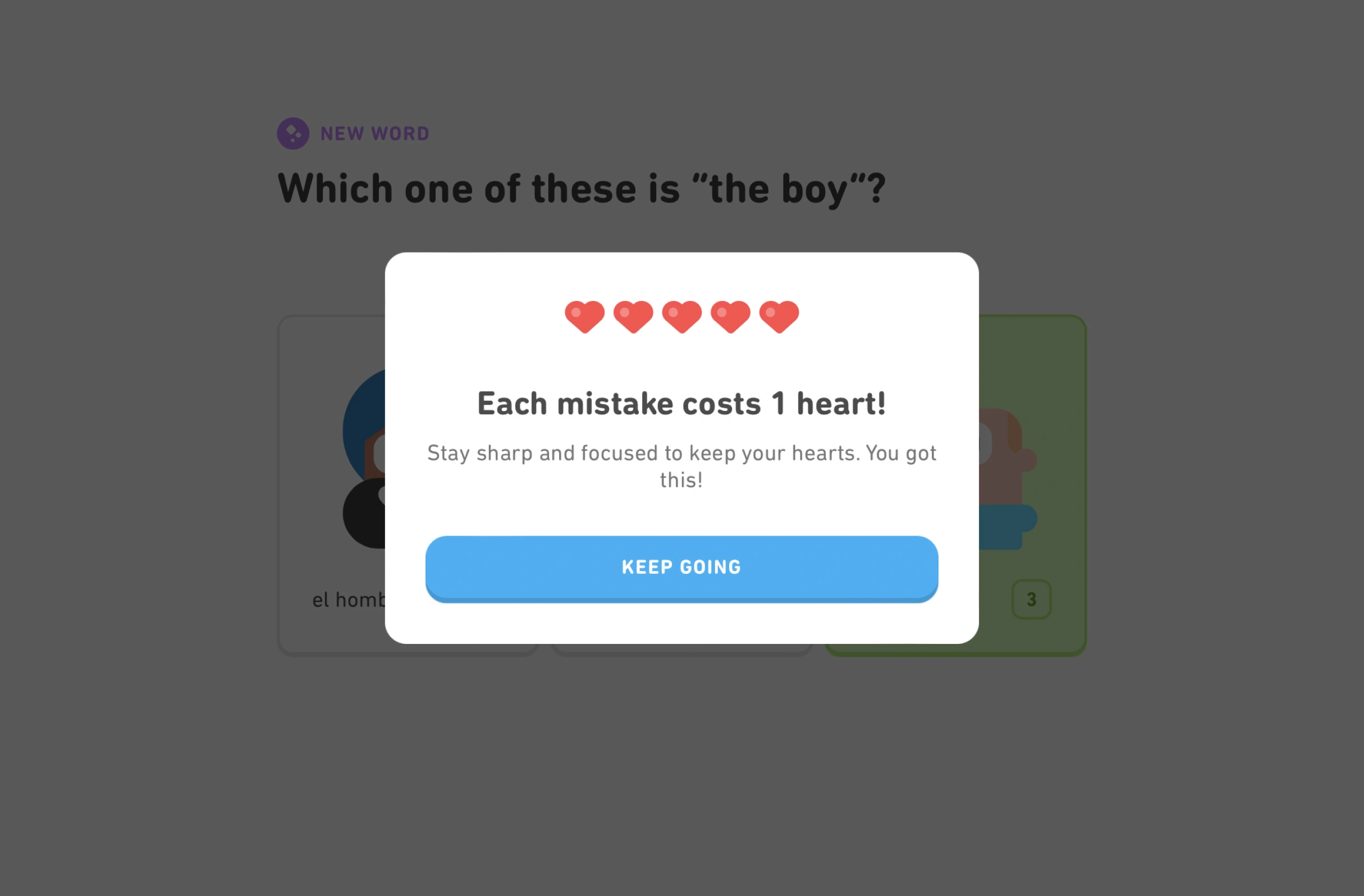
How do you add a sense of importance when engaging with a task? Duolingo do it with a "lives" mechanic, which encourages people to pay attention and stay focused.
See how companies like Duolingo, Tesla and Sainsbury's use gamification, with examples including lives, shareable streaks, rub-to-reveal rewards and social comparison.
Updated: 23/09/2026, view all 1,490 examples
Duolingo's lives stop careless tapping
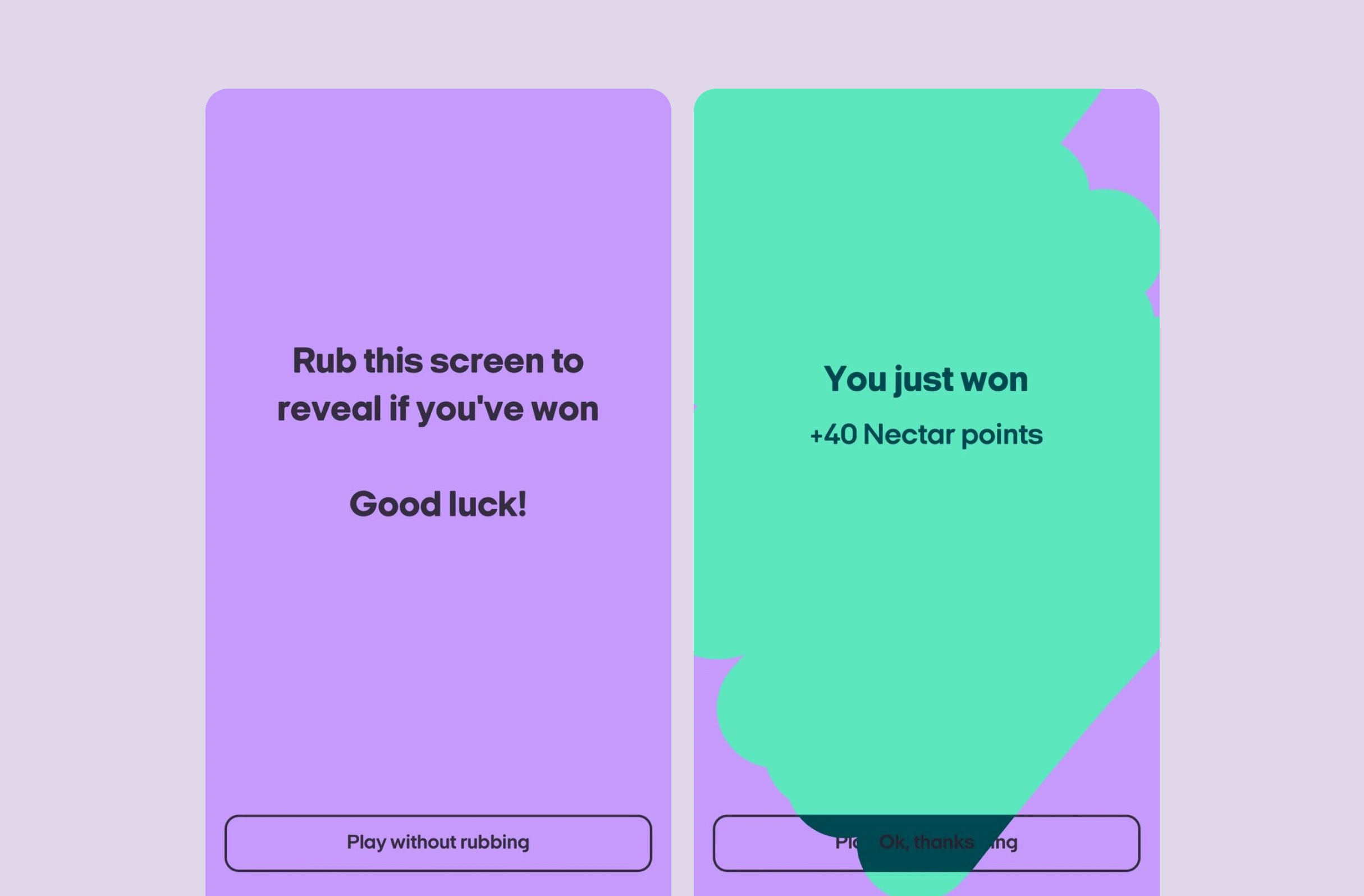
Sainsbury's rub-to-reveal creates a habit
Tesla frames charging as days on a treadmill
How do you add a sense of importance when engaging with a task? Duolingo do it with a "lives" mechanic, which encourages people to pay attention and stay focused.
Superhuman have gamified the process of answering emails ("hitting inbox 0") by recording streaks, with badges you can share.
After completing lessons, you'll trigger this 'emotional tap' mini game. It compares your personal best score to the all time high score.
You need to actively redeem rewards on Duolingo (which then gives you a random number of gems). The action of redeeming makes this more satisfying than if it automatically unlocked.
After making a purchase, the Sainsbury's app shows a 'rub to reveal' mini game to unlock nectar points.
If features can be coded in minutes, thoughtful design is what wins
Get the free content when it's released, straight to your inbox, no account required
"An exceptional resource for learning how to build habit-forming products that people love."

"I’d never met anybody who looks at usability and UX the way I do until I met Peter. Only he’s smarter."
"The completest view of the psychological underpinnings of human behaviour that I’ve ever seen."

"What a nice idea! Christopher Alexander would be proud to see patterns collected like this."